
Most learner drivers feel unsure about reverse bay parking before their test. At first, it can seem awkward, whether you are practising in a supermarket car park or using your instructor’s tips. With time and practice, though, it usually gets much easier.
If you’re currently taking driving lessons in Luton, you are probably already practising reverse bay parking. It is a common manoeuvre that may come up in your practical driving test. In this guide, we will cover how to reverse bay park, the usual reference points learners use, the test rules for this manoeuvre, and some common questions. We will also explain whether you need to use indicators and what mistakes could lead to faults.
Reverse Bay Parking: What This Guide Covers
Before we dive into the details, here is a quick overview of the main sections in this guide. You can go straight to the part you need or read through each step in order.
- How to Reverse Bay Park
- Do You Indicate When Reverse Bay Parking?
- Reverse Bay Parking Reference Points
- Reverse Bay Parking Driving Test Rules
- Can You Fail Your Driving Test on Reverse Bay Parking?
- Helpful Tools for Reverse Bay Parking

How to Reverse Bay Park
How do you reverse bay park in a way that feels simple and relaxed? Different instructors might teach slightly different methods, but the process usually follows the same basic steps. Once you break it down, it’s much easier to manage during lessons and in the driving test. Here’s a clear step-by-step guide to help you understand how this manoeuvre is usually done.
- Find a suitable space: Drive slowly through the car park and choose a bay that’s easy to access, ideally with plenty of space around it while you’re learning.
- Position the car correctly: Stop about one car width away from the bays and just ahead of the space you want to use. Check all around your vehicle before you start reversing.
- Select reverse gear and move slowly: Put the car in reverse when it’s safe and start moving back slowly and in control. This way, you can react if you need to.
- Steer at the correct point: As the back of your car reaches the right spot, start turning into the bay. Keep checking your mirrors and your surroundings as you reverse.
- Straighten and finish the manoeuvre: Once your car is mostly inside the bay, straighten the wheel and stop when you’re fully between the lines. It’s fine to make small adjustments if you need to.
Reverse bay parking comes down to good positioning, steady control, and keeping an eye on your surroundings. If you don’t get your alignment right the first time, it’s normal to make a small adjustment during lessons or the driving test.
When you learn with our driving school in Luton, your instructor will help you practice these adjustments to become more confident and consistent with the manoeuvre.

Do You Indicate When Reverse Bay Parking?
A lot of learner drivers wonder if they need to use indicators when reverse bay parking in a car park. The answer isn’t always straightforward, as it depends on the situation.
If you’re in a quiet car park with no other traffic, you might not need to indicate. But if there are other drivers nearby, it’s a good idea to use your indicators to show what you plan to do and help others understand your actions.
For example, it’s helpful to signal if a car is coming up behind you, if you need to cross a lane to get to your parking spot, or if your move might affect other drivers. The key is to use indicators to show your intentions, not just out of habit.
If you’re still learning about signalling, try to spend some lesson time practising when and how to indicate. This skill is important for safe driving, not just for reverse bay parking.
Reverse Bay Parking Reference Points
Instructors usually teach reference points early when showing how to reverse bay park. These points help you judge where your car is and when to move.
Reference points are visual cues that help you know when to steer, straighten, or stop. They often mean lining up parts of your car, like mirrors or door handles, with the bay lines or other markings.
For example, you might learn to:
- Start turning the steering wheel when a bay line appears at a certain spot in your mirror.
- Straighten the steering wheel when your car is parallel with the bay lines.
- Stop when a certain part of your car lines up with the end of the parking space.
These reference points are helpful because they give learners a clear and repeatable way to practice the manoeuvre while building confidence.
But keep in mind that reference points can change. They depend on your car, how your seat and mirrors are set, and the size or shape of the parking bays. So, use them as a guide, but also work on building your own sense of where your car is over time.

Reverse Bay Parking Driving Test Rules
For reverse bay parking in your driving test, the examiner does not expect you to be perfect. They want to see that you can do the manoeuvre safely, keep the car under control, and stay aware of what is happening around you. This is a common part of the test and usually takes place in the test centre car park, though sometimes it might be done along the driving route.
While you are parking, the examiner will watch how you handle the car and how safely you complete the whole manoeuvre.
- Make sure to look all around your car before and during the manoeuvre. Remember to check all of your mirrors and blind spots.
- Keep the car moving slowly and under control while reversing.
- Try to finish with your car fully inside the bay lines if you can.
- You need to show awareness of other road users and stop if anyone passes behind you.
- It is fine to make small adjustments if your car is not perfectly positioned.
- It is more important to stay in control than to park in one smooth move.
The main thing to remember is that reverse bay parking is judged mostly on safety and control, not on being perfect. If you show good observation, steady control, and awareness of others, you will give yourself the best chance to do well in your test.
Can You Fail Your Driving Test on Reverse Bay Parking?
If you’re getting ready for your driving test, it’s useful to understand how reverse bay parking works and what the examiner expects. Most of the time, you’ll be asked to reverse into a bay at the test centre, either at the end of your test or sometimes in a public car park. Try to park safely and keep control of the car, rather than worrying about perfection.
As you carry out the manoeuvre, the examiner will look at how well you observe your surroundings, control the car, and whether you finish inside the bay lines. They also want to see that you pay attention to people and vehicles nearby, and that you stop if someone walks or drives behind you while you’re reversing.
It’s possible to fail the reverse bay parking part, but it depends on how serious your mistakes are. Major faults usually involve unsafe actions, like hitting the kerb, not checking properly while reversing, or putting others in danger. Smaller mistakes, such as needing to adjust your position or taking a bit more time, are usually only minor faults if you stay safe and in control.

Helpful Tools for Reverse Bay Parking
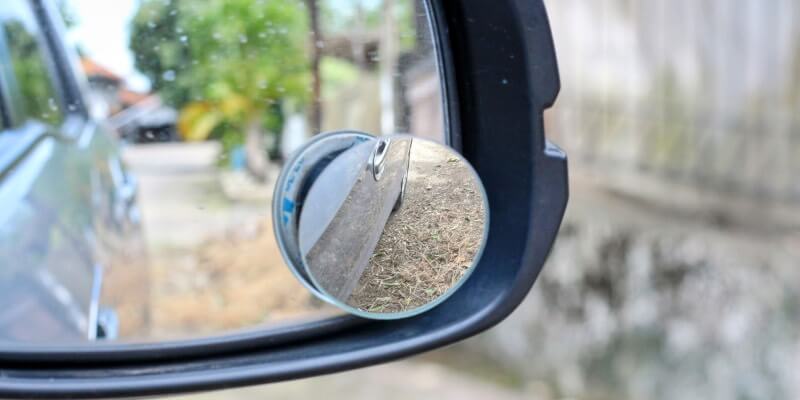
Modern tools such as blind-spot mirrors and reversing cameras can make reverse-bay parking easier. They help you see your surroundings better and improve your awareness when reversing, but they are meant to support your driving, not replace careful observation.
Here are some common tools and features that can help when you practise reverse bay parking:
- Reversing cameras: Give you a live view of what’s directly behind the car.
- Parking sensors: Alert you when you’re getting close to an object.
- Blind spot mirrors: Help reduce areas that are harder to see.
- Wide-angle rear-view mirrors: Improve overall visibility behind the vehicle.
- On-screen guiding lines: Help you judge distance and alignment when reversing.
These tools are helpful, but you should not rely on them completely.
Examiners still expect you to use mirrors and shoulder checks, and to show full control of the car.
The best way is to use these features as a guide while you build the skills to reverse bay park safely and accurately on your own.
Final Thoughts on Reverse Bay Parking
Reverse bay parking gets easier once you know the main steps, such as where to position your car, which reference points to use, and when to signal. As with most driving skills, practice and repetition will help you feel more confident.
During your driving test, the main focus is on being safe, staying aware, and keeping control, not on doing everything perfectly. If you know the rules for reverse bay parking, you’ll understand what examiners expect and what might cause faults.
Reversing cameras and sensors can be useful when you’re learning, but they should only support your driving, not replace proper observation. If you’re taking driving lessons in Luton with Drive Luton, your instructor will help you build your skills so you can do this manoeuvre confidently by yourself.