
What are the most common driving test manoeuvres?
If you’re getting ready for your practical test, chances are you’ve already searched for driving test manoeuvres more than once. You might be wondering what you’ll be asked to do, how difficult it really is, and whether one small mistake could cost you that pass certificate.
The good news? The manoeuvres aren’t designed to catch you out. They’re there to show the examiner that you can control the car safely and confidently in everyday situations.
Whether you’re just starting out or you’ve been taking driving lessons in Luton for a while, knowing what to expect can really calm your nerves. To help you feel prepared, this guide breaks down everything clearly and simply, connecting each step so you’re confident throughout your test.
Your guide to the most common driving test manoeuvres
The manoeuvres in your driving test are based on everyday driving situations. Things like parking, reversing, and safely repositioning the car are all skills you’ll use regularly once you’re driving on your own. Below, we break down the manoeuvres you might be asked to complete and what the examiner will be paying attention to when you do them.
- How many manoeuvres are in a driving test?
- What are the UK driving test manoeuvres?
- Can you fail a driving test on a manoeuvre?
- Building confidence before your test
How many manoeuvres are in a driving test?
Many learners ask: How many manoeuvres are in a driving test?
The answer is straightforward — you’ll only be asked to perform one manoeuvre during your test.
Knowing this helps you focus on preparation instead of worrying about which manoeuvre you’ll get.
The examiner will choose which manoeuvre you do, and this can happen at any point during the drive, depending on the route, traffic conditions, and the roads available around the test centre. Sometimes it happens earlier in the test, while other times it might come later, once you’ve already been driving for a while.
Next, let’s look at how this fits into the overall assessment.
The manoeuvre is only one key part of the test.
Examiners mainly assess your overall driving ability and focus on specific criteria: your general car control, hazard awareness, road positioning, responses to signs and markings, and your handling of the vehicle safety questions.
Your general driving
This refers to how smoothly and safely you control the car during normal driving. The examiner will assess your speed control, use of gears, braking, steering, and confidence while driving on different types of roads.
Observations and awareness
Safe driving relies heavily on good observation. Examiners watch closely to see whether you regularly check your mirrors, look ahead for potential hazards, and stay aware of pedestrians, cyclists, and other vehicles around you.
Road positioning
This involves keeping your lane position, maintaining a safe distance from parked cars, and properly positioning the vehicle when turning or approaching junctions. Good positioning shows that you’re aware of both the road layout and other road users.
Responding to traffic signs and road markings
During your drive, examiners are specifically checking that you notice and respond to road signs, traffic lights, lane markings, and speed limits early and correctly, expecting visible reactions such as adjusting speed, changing lanes, or preparing to stop.
The vehicle safety (“show me, tell me”) questions
At the beginning of the test, you’ll be asked one “tell me” question about vehicle safety, such as explaining how to check tyre pressure or oil levels. During the drive, you’ll also be asked a “show me” question, where you demonstrate a simple task, such as using the windscreen washers or demister, while continuing to drive safely.
Each of these areas contributes to the examiner’s overall picture of how ready you are to drive independently. Even though the manoeuvre often gets the most attention from learners, it’s actually just one part of a much bigger assessment.
If you’ve been getting plenty of practice in, you’ll have covered each of these manoeuvres several times already. Your instructor will usually build them into lessons alongside normal driving so they become part of your routine rather than something that feels separate or intimidating.
By the time you take your test, the manoeuvre should feel like something you’ve done many times before. The test might add a few nerves, but nothing you’re asked to do will be unfamiliar.
What are the UK driving test manoeuvres?
Here are the UK driving test manoeuvres you might be asked to perform:
There are three possible options:
- Bay parking
- Parallel parking
- Pulling up on the right
Let’s look at each one in a bit more detail.
Bay parking
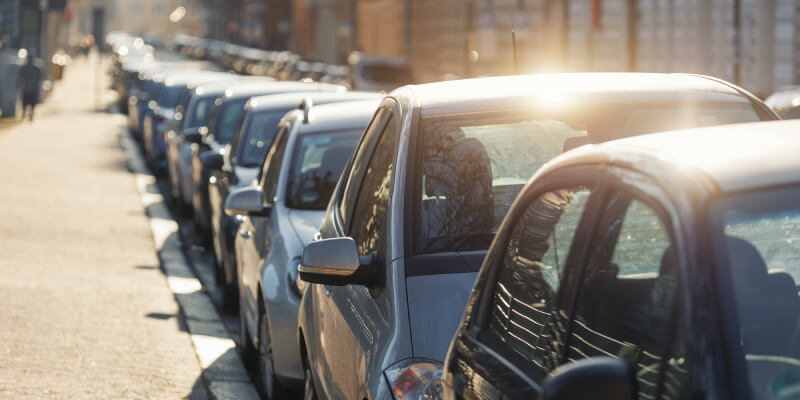
This could involve driving forward into a parking bay and then reversing back out, or reversing into a bay before driving forward to exit. It often takes place in a supermarket-style car park or at the test centre itself.
The examiner is looking for control, accuracy and strong observations. That means:
- Checking mirrors before turning
- Looking around for pedestrians
- Keeping within the bay markings
- Moving at a slow, controlled speed
You’re allowed to correct yourself. Adjust your position if needed; what matters is staying calm and aware.
Parallel parking
This is the one learners worry about most. But in reality, it’s a clear step-by-step process that becomes very manageable with practice.
You’ll normally be instructed to stop next to a parked car and then reverse into a space behind it. The examiner will be looking for steady clutch control, accurate steering, and continuous observation throughout the manoeuvre.
Parallel parking is one of the manoeuvres that many learners find tricky at first, and it’s common to make small errors that get corrected during lessons.
Pulling up on the right
For this manoeuvre, you’ll be asked to pull up on the right-hand side of the road, reverse back around two car lengths, and then safely rejoin traffic.
It can feel unfamiliar because we’re used to stopping on the left. But as long as you:
- Check all mirrors carefully
- Look over both shoulders
- Watch for cyclists and pedestrians
- Signal correctly before moving off
…it’s completely manageable
Many learners find it helpful to visualise each step of the manoeuvre before performing it on the road.
Can you fail a driving test on a manoeuvre?
Now for the question that’s probably on your mind:
Can you fail a driving test on a manoeuvre?
Yes — but usually only if the mistake affects safety.
A small adjustment or minor error won’t automatically mean a fail. This is something instructors regularly explain during lessons — examiners are looking for safe decisions, not perfection.
You would fail the test if your manoeuvre results in something unsafe, such as:
- Missing key observations: For example, reversing during a parallel park without properly checking over your shoulder and not noticing a pedestrian walking behind the car.
- Forcing another road user to react: If you rejoin traffic after pulling up on the right and a driver has to brake sharply or swerve around you, that would likely be marked as a serious fault.
- Losing proper control of the car: Mounting the kerb at speed during a bay park, or steering so inaccurately that you end up significantly outside the bay without correcting safely.
- Creating a potentially dangerous situation: Such as reversing out of a space without checking mirrors and blind spots, causing a cyclist to stop suddenly.
The rules on what counts as a serious fault state that examiners assess overall safety and competence. They expect you to handle each situation safely, even if it’s not flawless.
If you’re learning with a local driving school in Luton, your instructor should already be preparing you for these standards during mock tests, so there are no surprises on the day.
Building confidence before your test
Understanding the manoeuvres is one thing; having the confidence to perform under pressure is another.
Here are a few realistic ways to boost your confidence:
- Practise in different environments: Quiet roads are a great place to start — but try busier areas too (when you’re ready). It builds real-world confidence.
- Slow everything down: Most mistakes happen when learners rush. Take your time—examiners prefer calm over speed.
- Make your observations obvious: Examiners can’t mark what they can’t see. They expect your mirror and shoulder checks to be clear and visible, so slightly exaggerate them for their benefit.
- Ask for honest mock test feedback: If you’re currently taking driving lessons in Luton, treat your mock tests seriously now so the real one feels far less intimidating.
Staying Safe and Confident on Your Test
So, what are the most common driving test manoeuvres? Bay parking, parallel parking, and pulling up on the right — and you’ll only be asked to complete one of them.
The key thing to remember is that the manoeuvre isn’t there to trip you up. Examiners simply want to see you control the car, show awareness of your surroundings, and make safe, considered decisions.
Perfection isn’t the goal during your test. What matters most is staying calm, taking your time, and showing the examiner that you’re aware of what’s happening around you. If you follow the routine you’ve practised in your lessons and make safe decisions, you’ll handle the manoeuvre just fine.
With enough practice and useful feedback from your instructor, these skills start to feel much more natural. By the time your test arrives, you should feel ready to deal with whichever manoeuvre the examiner asks you to complete.